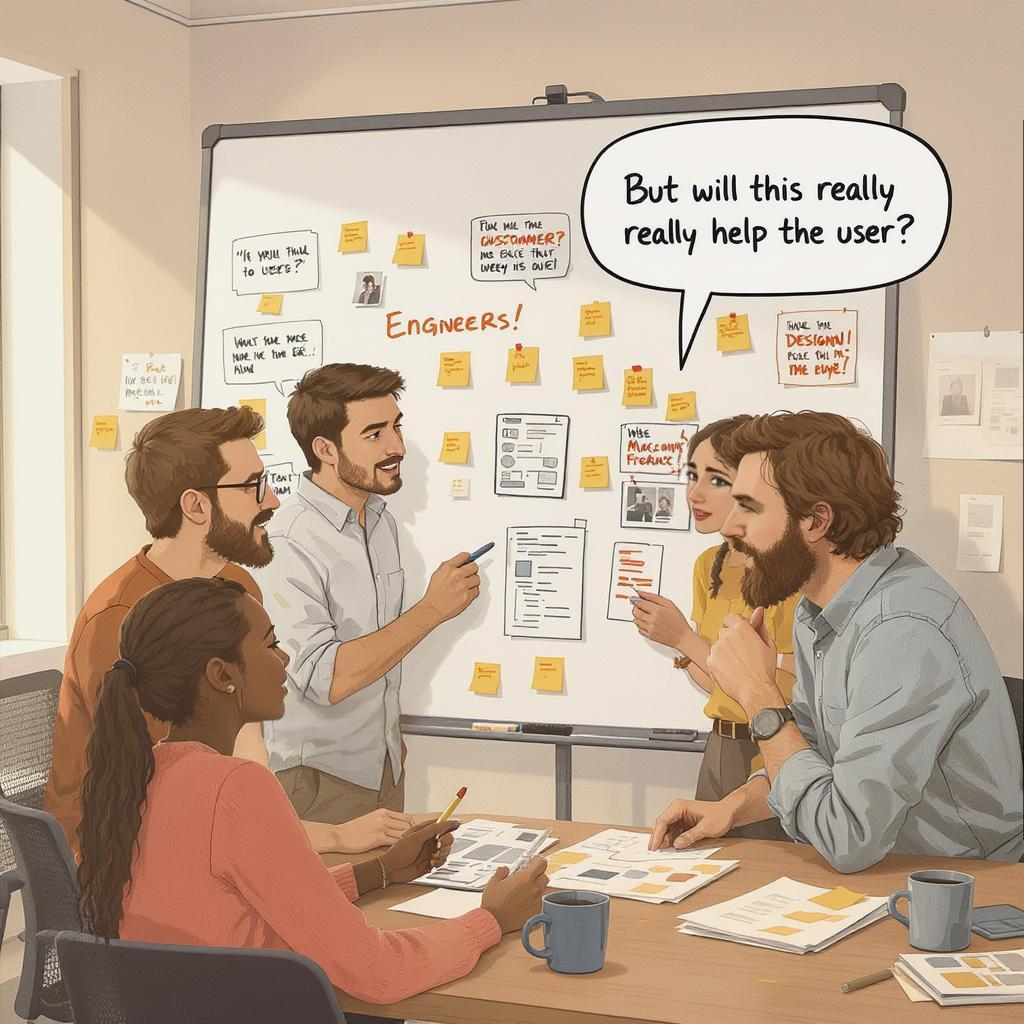
The customer-oriented engineer
I’ve worked with hundreds of engineers in my time. First as a front-end developer, then as a team lead, later as a product manager and in recent years as a technology leader. If there’s one thing I’ve consistently seen, it’s this: the real gems of any product team are the engineers who care deeply about the customer.
A good engineer writes solid, efficient, and scalable code. A great engineer does that as well, but also understands why they’re building something, who they’re building it for, and how it will actually be used. They don’t just optimize for performance or consistency; they optimize for when the customer experiences the product, i.e. for impact.
Great (customer-oriented) engineers ask questions like:
- Does this feature actually solve the user’s problem?
- How will this affect the user’s overall experience of the product?
- Is there a simpler or better way to achieve the same outcome?
Instead of blindly following a PRD (that the Product Manager -me- probably wrote), they pause a moment to think critically. They spot potential friction before it reaches the customer. They raise a flag when something doesn’t make sense. And they’re invested in the outcome, not just the output.
When you have engineers are that engaged with the customer’s needs, a lot of friction goes away and almost everything in the product development process gets better. Your products and features starts bceoming more intuitive. Bugs that impact your users are now prioritized higher than less significant tasks. Technical decisions are made with context, not just requirements.
However, far from every engineer starts out with a strong customer mindset, but any empathic engineer (or person in general) can learn to adopt it. And it’s my opinion, that it’s the product manager’s job to ensure they do so. Here are some simple ways to do that:
- Bring engineers into user research and customer sessions, so they hear customer feedback firsthand and experience how they affect the experience of the end-user.
- Encourage (almost force) engineers to use the product themselves, getting their own feel for the product and user experience and a better chance to bring improvements to the table.
- Frame technical work in terms of user impact instead of just business goals or feature specs. User stories can help with this, but aren’t a requirement.
The best engineers I’ve worked with were absolutely skilled in the profession, but they were also problem solvers who genuinely cared about providing real value for the people using what we built.
Help and encourage your engineers to become customer-oriented.